
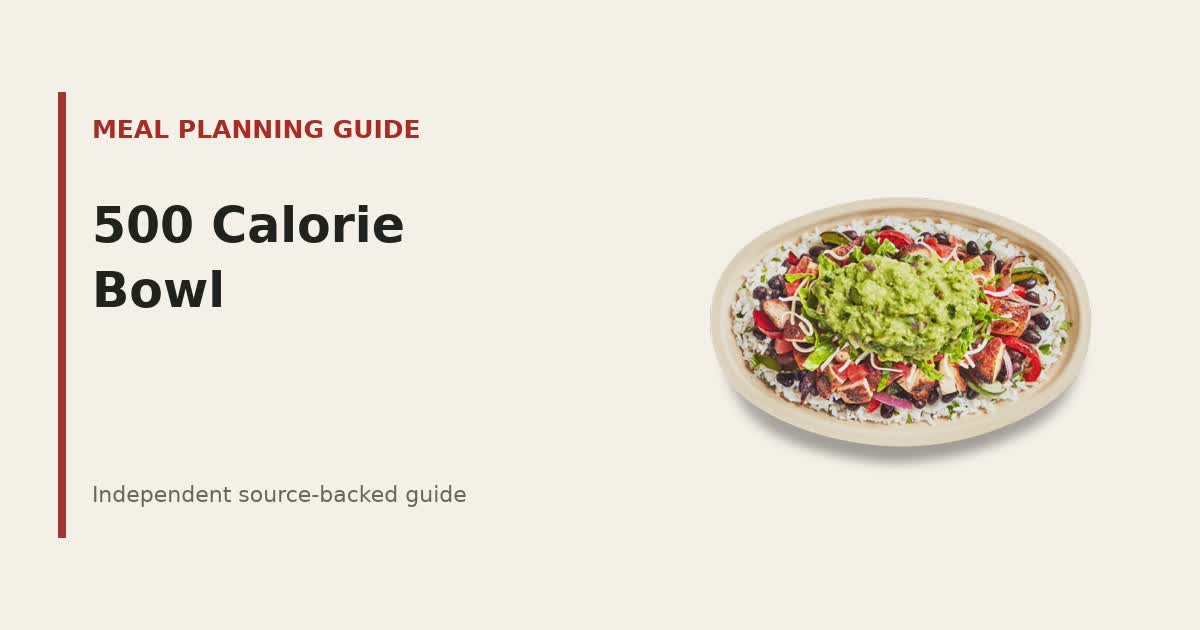
Chipotle salad calories start at 5 calories for the represented Salad format in this site’s dated snapshot. That low starting number is only the container and base; it is not the calorie total of a finished salad. Protein, rice, beans, cheese, salsa, dressing, guacamole, chips, and drinks must be counted as separate rows. Open the Chipotle calorie calculator to build the exact combination instead of treating “salad” as a complete nutrition answer.
The Salad format contributes 5 calories
The local calculator represents Salad as a buildable format with a 5-calorie starting contribution. This is useful because it makes the arithmetic visible: the format itself is small, while the ingredients selected after it supply most of the energy and other nutrients. A 5-calorie starting value should therefore never be copied into a food diary as though it were the total for a chicken salad, steak salad, or salad with dressing.
Choose Salad first and then add only the foods that match the order being modeled. The format does not silently include Chicken, rice, beans, salsa, cheese, sour cream, guacamole, queso, vinaigrette, chips, or a beverage. The Chipotle menu calories guide keeps the base formats and ingredient rows separate so a reader can see which number came from the container and which came from a selected item.
- Salad format: 5 represented calories.
- The base is not a finished meal total.
- Every intended ingredient, side, and drink must be selected separately.
Protein, rice, and beans determine the main subtotal
Add one represented Chicken portion to Salad and the subtotal is 185 calories: 5 for Salad plus 180 for Chicken. Steak produces 155 calories before any other ingredient because its represented portion is 150 calories. Carnitas adds 210, Barbacoa adds 170, and Sofritas adds 150. These examples are deliberately component-based. They do not claim that a server will place exactly the standardized weight in a particular order.
Grains and beans are also independent rows. White Rice and Brown Rice each contribute 210 calories in the current local snapshot, while Black Beans and Pinto Beans each contribute 130. A Salad with Chicken, White Rice, and Black Beans therefore models as 5 + 180 + 210 + 130 = 525 calories. Change Chicken to Steak and the same combination becomes 495. Change White Rice to Brown Rice or Black Beans to Pinto Beans and the calorie total stays the same, although the full nutrition fields can change.
Use the nutrition and sources guide when comparing equal-calorie swaps. Calories are only one field; sodium, fiber, carbohydrates, fat, sugar, and protein can differ even when two rows share a calorie value. A salad is not automatically lighter than a bowl once rice, beans, protein, and rich toppings are included.
- Salad + Chicken: 5 + 180 = 185 calories before other additions.
- Salad + Steak: 5 + 150 = 155 calories before other additions.
- Salad + Chicken + White Rice + Black Beans: 525 calories.
- Salad + Steak + White Rice + Black Beans: 495 calories.
Toppings and dressing can change the answer quickly
Low-calorie vegetables and salsa still belong in the calculation. Fajita Vegetables add 20 calories, Romaine Lettuce adds 5, Fresh Tomato Salsa adds 25, Tomatillo-Green Chili Salsa adds 15, and Tomatillo-Red Chili Salsa adds 30 in the represented rows. Add Fajita Vegetables and Fresh Tomato Salsa to the 495-calorie Steak salad and the modeled result is 540. Describing these additions as “free” hides both their calories and their other nutrition fields.
Richer toppings have a larger effect. Monterey Jack Cheese adds 110 calories, Sour Cream adds 110, Queso Blanco adds 120, and Guacamole adds 230. The local row for Chipotle Honey Vinaigrette adds 220. Starting with the 525-calorie Chicken, rice, and beans example, adding Cheese and Guacamole produces 865: 525 + 110 + 230. That may be a useful order, but it should be labeled as an 865-calorie modeled salad rather than assumed to remain light because the word salad appears in the order name.
Dressing deserves its own check. A full represented vinaigrette row is not the same as a small visual drizzle, and the calculator cannot weigh an amount poured at the restaurant. If a personal estimate is needed, state that it is an estimate and avoid presenting half a packet or a partial serving as an official row. The existing nutrition disclaimer explains this boundary.
- Fajita Vegetables: 20 calories; Romaine Lettuce: 5 calories.
- Fresh Tomato Salsa: 25 calories; Green Chili Salsa: 15 calories.
- Monterey Jack Cheese: 110 calories; Sour Cream: 110 calories.
- Guacamole: 230 calories; Honey Vinaigrette: 220 calories.
Compare salads by changing one row at a time
A reliable comparison holds every choice constant except the row being tested. To compare Chicken and Steak, keep Salad, White Rice, Black Beans, salsa, and dressing unchanged, then swap only the protein. To compare rice colors, keep the protein and all toppings unchanged. This method turns the displayed total into an explanation: the difference belongs to the selected row rather than to several simultaneous edits.
For a simple controlled example, Salad + Steak + Brown Rice + Pinto Beans equals 495 calories before toppings because 5 + 150 + 210 + 130 = 495. The same format with Chicken equals 525. The same Steak salad with no rice but with Guacamole equals 515: 5 + 150 + 130 + 230. This is a different meal, not a direct substitution of guacamole for rice in a standard recipe, so keep the changed components visible in the saved summary.
Quantity controls also need care. Selecting an item twice models two standardized servings; it does not prove that a restaurant provided a measured double portion. “Light,” “extra,” and “on the side” may not map cleanly to a numeric row. Use the tool for repeatable planning and comparisons, then treat the result as a transparent model rather than a laboratory measurement.
- Hold all choices constant when testing a protein or topping swap.
- Steak salad with rice and beans: 495 calories before toppings.
- Chicken version of the same base: 525 calories before toppings.
- Salad + Steak + Black Beans + Guacamole without rice: 515 calories.
Sides and drinks are part of the complete meal
A salad ordered with chips, queso, guacamole, or a drink is not represented by the salad subtotal alone. Tortilla Chips add 540 calories, Chips & Guacamole is a separate 770-calorie preset row, and a side of Queso Blanco is 240 calories in the local source-backed table. Avoid adding a bundled Chips & Guacamole record on top of the individual chips and guacamole rows when the bundled record already represents both; that would count the same foods twice.
Drinks can be just as important to the final number. The local exact single-size rows include zero-calorie options as well as drinks with calories, so select the actual beverage instead of assuming every drink is neutral. If the question is about the salad itself, report the salad components separately from the optional meal add-ons. If the question is about the whole order, include every item expected to be consumed and label the scope clearly.
- Tortilla Chips: 540 represented calories.
- Chips & Guacamole: 770 as a combined source row.
- Side of Queso Blanco: 240 represented calories.
- Add a beverage only when it is part of the modeled order.
Build the final salad with current source guidance
The practical answer to “how many calories are in a Chipotle salad?” is that there is no single finished total without the selections. The represented Salad base is 5 calories. A Chicken, rice, and beans example is 525 before toppings; a Steak, rice, and beans example is 495. Add salsa, cheese, guacamole, dressing, sides, and drinks explicitly, and review the complete summary after each change.
This site uses a dated source snapshot, so menu recipes, serving descriptions, availability, and nutrition values may change. Check the official Chipotle nutrition calculator for current first-party information and the official Chipotle allergen guidance when an ingredient or cross-contact decision matters. Other Chipotle nutrition guides explain rice, guacamole, bowls, sauces, tortillas, extra toppings, and kids portions. Use the calculator result as a reproducible planning model, not individualized medical advice or a guarantee of a hand-served portion.
Check the current menu before ordering
This independent guide uses a dated official nutrition snapshot for repeatable comparisons. Recipes, availability, listed values, and restaurant portions can change. Use Chipotle's current information for ordering, allergy, and dietary decisions.